
Machining remains one of the most important manufacturing processes for producing precise metal and plastic components. While modern production facilities increasingly rely on CNC technology, conventional machining still plays a valuable role in many workshops and manufacturing environments. Both methods remove material to create finished parts, but the way they operate, the level of precision they achieve, and their production capabilities differ significantly.
This guide explores the key differences between CNC machining and conventional machining to help manufacturers, engineers, and business owners determine which approach best suits their needs.
Understanding CNC Machining
CNC machining stands for Computer Numerical Control machining. In this process, machine tools such as mills, lathes, and routers are controlled through programmed software instructions. The machine follows digital commands that dictate tool movements, cutting speeds, and positioning with exceptional accuracy.
Once a program is created and verified, the machine can repeatedly produce identical parts with minimal operator involvement. CNC machining is commonly used in industries where precision, consistency, and efficiency are critical.
Understanding Conventional Machining
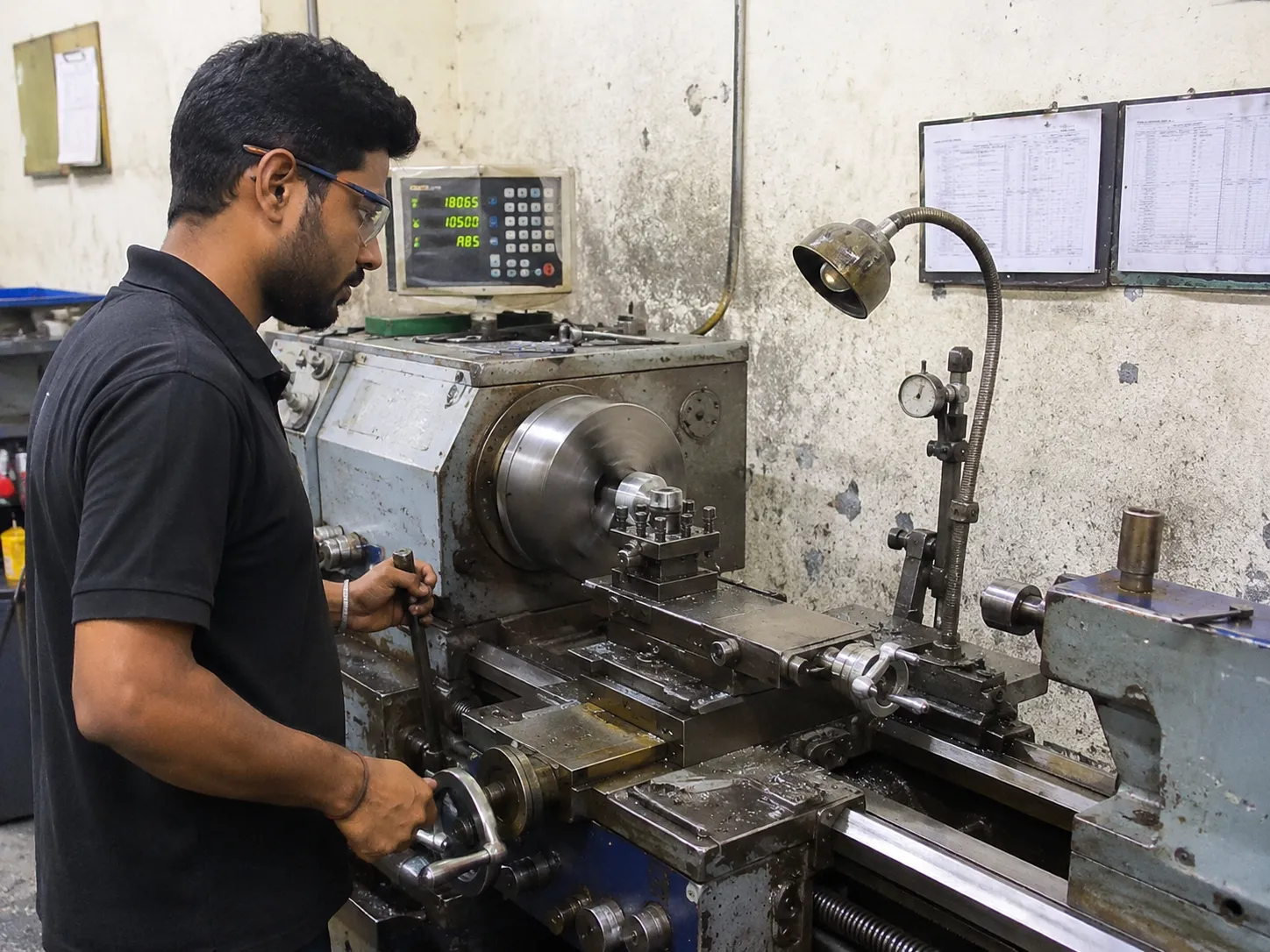
Conventional machining, often called manual machining, relies on a skilled machinist to operate the equipment directly. The operator controls tool movement, feed rates, spindle speeds, and positioning using handwheels, levers, and manual adjustments.
Although manual machining lacks the automation of CNC systems, it remains useful for repair work, custom fabrication, prototype development, and low-volume production runs where flexibility is more important than speed.
CNC Machining vs Conventional Machining: Major Differences
Precision and Accuracy
One of the most noticeable differences between the two methods is the level of accuracy they can achieve.
CNC machines operate according to programmed instructions, allowing them to maintain extremely tight tolerances across hundreds or even thousands of parts. Once the machining program is optimized, every component is produced with nearly identical dimensions.
Conventional machining accuracy depends largely on the operator’s skill and experience. Even highly skilled machinists may introduce small variations between parts during production.
For applications requiring strict dimensional consistency, CNC machining typically offers a clear advantage.
Production Speed
Speed is another area where CNC technology often outperforms manual methods.
A CNC machine can execute complex machining operations automatically and continuously. Many modern systems can perform multiple operations in a single setup, reducing downtime and increasing throughput.
Conventional machining requires constant operator involvement, including manual adjustments and tool positioning. As a result, production cycles are generally longer, especially for complex components.
Part Complexity
Modern product designs often include intricate features, tight tolerances, and complex geometries.
CNC machining excels at producing these challenging designs because the machine can follow highly detailed digital instructions. Multi-axis CNC machines can create shapes and contours that would be extremely difficult to achieve manually.
Conventional machining is better suited for straightforward parts with simpler geometries. Producing highly complex components manually can be time-consuming and may not always deliver consistent results.
Repeatability
Manufacturers producing large quantities of identical parts need reliable repeatability.
CNC machines can reproduce the same component repeatedly without significant variation. Once the program is loaded, the machine follows the exact same instructions every cycle.
In manual machining, repeatability depends on the operator’s ability to replicate each setup and machining process. Small differences can occur from part to part, particularly during longer production runs.
Labor Requirements
CNC machining reduces the amount of direct labor required during production. While programming and setup demand technical expertise, a single operator can often supervise multiple machines simultaneously.
Conventional machining requires hands-on attention throughout the machining process. The machinist remains actively involved in positioning tools, monitoring cuts, and making adjustments as needed.
For manufacturers seeking higher productivity with fewer labor hours, CNC machining offers a significant advantage.
Setup and Programming
Although CNC machining provides many production benefits, it requires upfront preparation.
Before manufacturing begins, a machining program must be created, tested, and optimized. For simple jobs, this setup phase can take longer than the actual machining process.
Conventional machining typically involves less preparation. Skilled machinists can often begin producing simple parts without extensive programming or digital setup.
For one-off projects or urgent repair work, manual machining may provide a faster solution.
Cost Considerations
Cost is often a deciding factor when choosing between machining methods.
CNC machines require substantial investment in equipment, software, tooling, and operator training. However, these costs are often offset by increased productivity and reduced labor expenses during high-volume production.
Conventional machines generally have lower purchase and maintenance costs. For small workshops or businesses producing limited quantities, manual machining can be a more economical option.
Side-by-Side Comparison
| Factor | CNC Machining | Conventional Machining |
|---|---|---|
| Machine Control | Computer-programmed | Manual operation |
| Precision | Extremely high | Operator-dependent |
| Production Speed | Fast | Moderate |
| Repeatability | Excellent | Variable |
| Labor Involvement | Lower | Higher |
| Complex Geometries | Easily handled | More challenging |
| Initial Investment | Higher | Lower |
| Best Application | High-volume production | Custom and low-volume work |
When CNC Machining Is the Better Choice
CNC machining is often the preferred solution when:
- High precision is required
- Production volumes are large
- Complex part geometries are involved
- Consistent quality is essential
- Manufacturing efficiency is a priority
- Multiple identical components must be produced
Industries such as aerospace, automotive, medical device manufacturing, and industrial equipment production frequently depend on CNC machining for these reasons.
When Conventional Machining Makes Sense
Conventional machining remains valuable in situations such as:
- Equipment repair and maintenance
- Prototype development
- Low-volume manufacturing
- Custom fabrication projects
- Quick modifications to existing parts
- Budget-conscious operations
Many machine shops continue to use manual equipment alongside CNC systems because each method serves different production needs.
Final Thoughts
The choice between CNC machining and conventional machining depends on the specific requirements of a project. CNC machining delivers exceptional precision, repeatability, and production efficiency, making it ideal for complex and high-volume manufacturing. Conventional machining, meanwhile, offers flexibility, lower startup costs, and practical advantages for custom work and smaller production runs.
Rather than viewing one method as a replacement for the other, many manufacturers find the greatest success by using both technologies where they provide the most value. Understanding their strengths and limitations helps businesses make smarter production decisions while balancing cost, quality, and efficiency.