
For manufacturers, deciding whether to produce sheet metal components in-house or outsource them is an operational decision that affects production capacity, manufacturing costs, quality, and delivery schedules.
In-house production provides direct control over equipment and scheduling, but it also requires investment in machinery, trained operators, maintenance, and supporting infrastructure. Outsourcing allows manufacturers to access external production capacity without owning every piece of equipment required for a project.
The right approach depends on the type of components being produced, production volume, available equipment, and the cost of maintaining the required manufacturing capability.
Here are the situations in which outsourcing sheet metal component production deserves serious consideration.
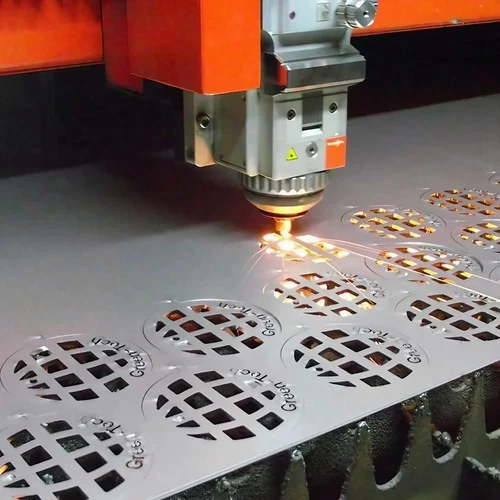
1. When Internal Production Capacity Is Insufficient
A manufacturing line may be able to handle normal production volumes but struggle when orders increase or several projects require components simultaneously.
Adding more work to an already constrained production process can delay other operations, including assembly and dispatch.
Outsourcing selected sheet metal components can provide additional capacity without requiring an immediate expansion of the existing facility.
For example, an equipment manufacturer receiving a large order may outsource part of its laser-cut component production while keeping critical assembly operations in-house.
The decision should be based on the actual production bottleneck. If laser cutting is limiting output, outsourcing that operation may help. If the constraint lies elsewhere, outsourcing cutting alone may not improve overall throughput.
2. When Purchasing Equipment Is Difficult to Justify
Investing in a laser cutting machine or CNC press brake involves more than the purchase price. The total cost of ownership may include installation, operator training, maintenance, consumables, software, electricity, material handling, and facility requirements.
These costs need to be evaluated against the expected workload over the equipment’s useful life.
If a machine would be used only occasionally, outsourcing may be more practical than carrying the fixed costs of an underutilized asset.
Conversely, manufacturers with stable demand and high machine utilization may find in-house production economically attractive.
Engineering consideration: Compare the cost per acceptable component—not just the machine’s hourly operating cost. Include setup time, material utilization, rejected parts, labour, maintenance, and production downtime.
3. When Your Factory Lacks the Required Process Capability
Not every manufacturing facility has the equipment or technical resources needed for every sheet metal component.
A job may require laser cutting followed by CNC bending, or other operations that are not available in-house. Purchasing equipment for a single project or an infrequent requirement may not be commercially justified.
An external manufacturing partner can provide access to the required processes, provided its equipment and capabilities match the component specifications.
Before placing an order, confirm:
- Material grade and thickness compatibility
- Required component geometry and dimensional specifications
- Available cutting and bending capabilities
- Applicable inspection requirements
- Whether additional operations are included in the supplier’s scope
Do not assume that every laser cutting supplier offers complete fabrication services. Verify which operations are performed in-house and which, if any, are subcontracted.
4. When Production Demand Is Irregular
Some manufacturers produce the same components continuously. Others work on project-based orders, customized equipment, or products with seasonal demand.
When workloads fluctuate significantly, maintaining enough in-house capacity for peak demand can leave equipment underutilized during quieter periods.
Outsourcing can help accommodate temporary increases in demand without permanently expanding production capacity.
However, this flexibility depends on supplier availability, material availability, order quantities, and agreed lead times. For recurring work, it is useful to discuss expected monthly demand and forecast future orders with the supplier.
5. When Skilled Operators and Maintenance Resources Are Limited
Laser cutting and CNC bending require appropriate machine programming, process setup, trained operators, and maintenance support.
If a business cannot reliably staff or maintain the equipment, owning the machinery may introduce operational risks rather than solve a production problem.
Outsourcing transfers responsibility for operating and maintaining the supplier’s equipment to that supplier. It does not remove the manufacturer’s responsibility for defining specifications, approving drawings, and verifying that supplied components meet requirements.
This arrangement can be useful when a company wants to keep its internal team focused on product assembly, system integration, or other core manufacturing operations.
6. When You Need to Increase Production Without Expanding the Factory
Adding machinery can require more than floor space. Manufacturers may also need to accommodate raw material storage, loading and unloading, safe material movement, utilities, and finished-part handling.
If the facility is already operating near its practical capacity, expanding the in-house process may be difficult.
Outsourcing selected components can reduce the need to install additional cutting or bending equipment inside the factory.
Before making the decision, consider the full workflow, including incoming materials, work-in-progress inventory, supplier deliveries, and the space required to store finished components.
7. When Developing a New Product or Manufacturing a Prototype
New product development often involves several design iterations before a component is released for production.
At this stage, purchasing dedicated equipment may be difficult to justify because the final design, order volume, and long-term demand may not yet be established.
Outsourcing can provide access to manufacturing processes for prototype and initial production quantities without requiring the business to build an entire production setup.
To avoid unnecessary rework, issue clearly identified drawing revisions and confirm material specifications, critical dimensions, and quantities before manufacturing begins.
Once demand becomes predictable, evaluate whether continued outsourcing or in-house production offers the better long-term economics.
8. When Multiple Sheet Metal Operations Need Coordination
A component may require laser cutting, bending, and other fabrication operations before it is ready for assembly.
When different suppliers perform each operation, the manufacturer must coordinate delivery schedules, drawing revisions, inspection, transport, and responsibility for nonconforming parts.
Using one capable supplier for multiple operations can simplify coordination and reduce the number of separate supplier interfaces.
For example, sourcing laser cutting and CNC bending from the same provider may make it easier to coordinate the production sequence for a formed sheet metal component.
This does not automatically guarantee shorter lead times or better quality. Confirm the supplier’s process capabilities, production capacity, inspection arrangements, and delivery commitments.
9. When Internal Production Is Delaying Higher-Priority Work
Not every component needs to be manufactured internally.
If your production team is spending time on outsourced-capable components while critical assembly, testing, or other constrained operations fall behind, transferring selected work to an external supplier may improve resource allocation.
The objective is not simply to reduce the workload. It is to direct internal resources toward operations where they provide the greatest value or where external alternatives are less suitable.
Before outsourcing, identify the actual bottleneck and assess whether transferring the work will improve the complete production schedule.
How to Evaluate Whether Outsourcing Makes Financial Sense
A supplier’s quoted price should be compared with the full cost of producing the same component internally.
For in-house production, account for:
- Equipment ownership and financing
- Labour and machine setup
- Programming and production preparation
- Consumables, maintenance, and electricity
- Material handling and scrap
- Inspection, rework, and rejected components
- Downtime and unused machine capacity
For outsourced production, consider:
- Quoted manufacturing charges
- Material supply, where applicable
- Packaging and transportation
- Incoming inspection and supplier coordination
- Additional processing charges
- Inventory requirements and delivery-related risks
Use the same drawing, material specification, quantity, and acceptance criteria for both calculations.
For a fair comparison, assess more than one production volume. A process that is economical for a small batch may have a different cost advantage at higher volumes.
What Should You Check Before Selecting an Outsourcing Partner?
The supplier must be able to manufacture the component to the required specification and deliver it within the agreed schedule.
Evaluate the following before committing to production:
Technical capability: Confirm that the supplier can process the required material, thickness, geometry, and component design.
Quality control: Agree on drawing revisions, critical dimensions, material specifications, inspection methods, and acceptance criteria.
Production capacity: Check whether the supplier can accommodate your order quantity and expected repeat demand.
Delivery reliability: Establish realistic lead times, delivery arrangements, and communication procedures for delays or design changes.
Scope of work: Confirm whether the quotation covers only laser cutting or also includes CNC bending, additional fabrication, finishing, and packaging where required.
For repeat production, approved drawings, documented specifications, and clear change-control procedures help maintain consistency between orders.
Conclusion
A manufacturer should consider outsourcing sheet metal component production when internal capacity is constrained, required equipment is unavailable, demand fluctuates, or additional machinery cannot be justified economically.
Outsourcing can also support prototype development, temporary production increases, and projects involving multiple manufacturing processes.
However, it is not automatically cheaper, faster, or more reliable than in-house manufacturing. The decision should be based on total cost, process capability, production volume, quality requirements, and supplier performance.
A structured evaluation helps manufacturers determine which components should remain in-house and which are better assigned to an external production partner.
Need Laser Cutting or CNC Bending Support?
Lasmatic Engineering Co. works with businesses that require laser-cut and CNC-bent sheet metal components.
If you are evaluating external manufacturing for an upcoming project, share your component drawings, material specifications, required quantities, and delivery schedule to discuss the job requirements and request a quotation.
Contact Lasmatic Engineering Co. to discuss your sheet metal component requirements.