
Mild steel (MS) is one of the most widely used materials in engineering, fabrication, machinery, automotive, and industrial manufacturing. Laser cutting provides a precise and efficient way to produce MS components in different shapes, sizes, and thicknesses.
Three factors are particularly important when evaluating MS laser cutting: cost, capacity, and application.
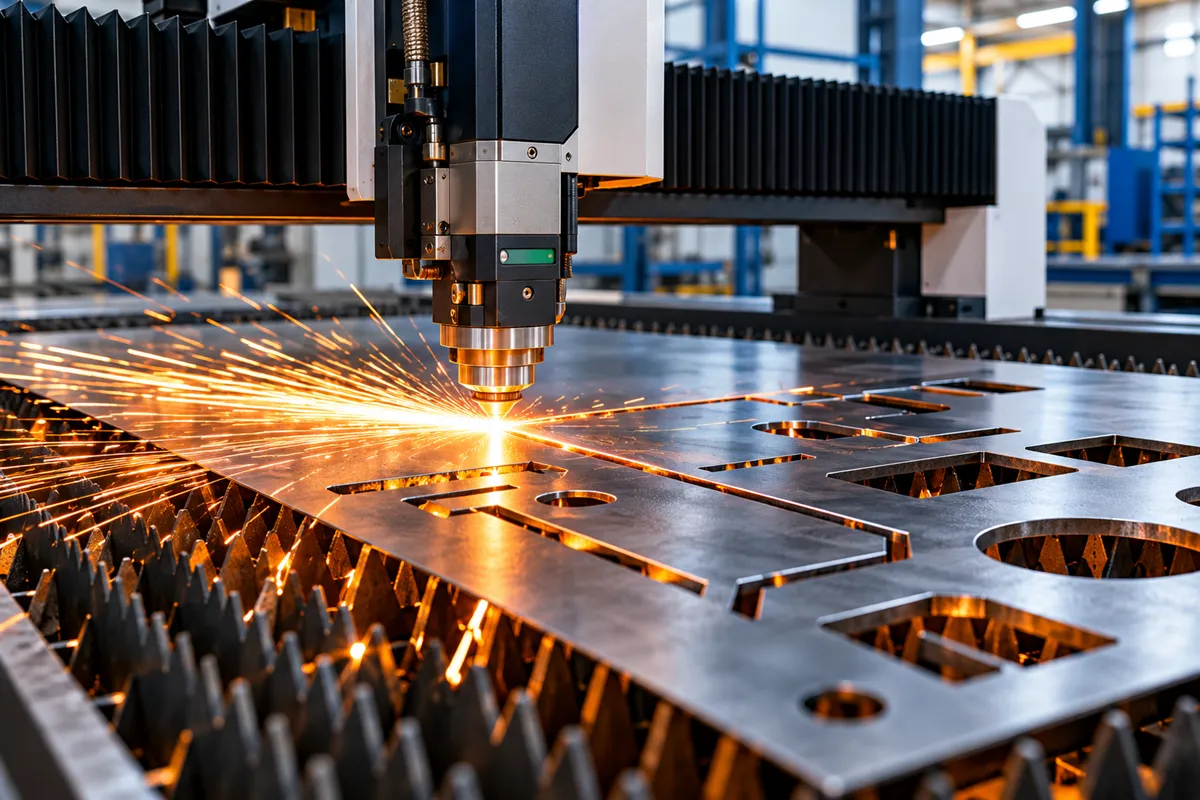
Mild Steel Laser Cutting Cost
The cost of mild steel laser cutting depends on the material, component design, cutting time, and quantity.
The main factors affecting cost are:
- MS thickness
- Material grade
- Cutting length
- Number and size of holes
- Component complexity
- Quantity
- Sheet utilisation
- Cutting speed
- Assist gas consumption
A simple component with a short cutting profile generally requires less processing time than a complex component with multiple holes, slots, and contours.
For production work, efficient sheet nesting can also improve material utilisation and reduce scrap, helping control the overall component cost.
For an accurate quotation, the drawing, MS thickness, material grade, and quantity are normally required.
Mild Steel Laser Cutting Capacity
The cutting capacity of a laser depends on several factors rather than laser power alone.
Important factors include:
- Laser power
- MS thickness
- Material grade
- Cutting parameters
- Assist gas
- Sheet size
- Required edge quality
- Component geometry
Higher laser power can support the cutting of thicker MS material, while thinner sheets can generally be processed at higher cutting speeds.
The maximum possible thickness should not be confused with the economical production thickness. For industrial applications, cutting speed, edge quality, accuracy, and operating cost all need to be considered.
Applications of Mild Steel Laser Cutting
| Industry / Sector | Applications | Typical Components |
|---|---|---|
| Engineering | Precision fabricated parts | Brackets, plates, supports, base plates |
| Machinery Manufacturing | Machine construction and assemblies | Frames, guards, mounting plates, machine parts |
| Industrial Fabrication | Structural and fabricated assemblies | Flanges, profiles, support plates, brackets |
| Automotive | Vehicle and equipment components | Mounting brackets, structural parts, prototype components |
| Electrical & Panels | Electrical equipment and enclosures | Panel plates, cabinet parts, mounting plates |
| Agricultural Machinery | Agricultural equipment and implements | Frames, brackets, supports, machine components |
| HVAC | Equipment and ducting components | Brackets, panels, mounting parts |
| Construction & Infrastructure | Structural and support applications | Plates, brackets, base plates, connectors |
| Material Handling | Industrial handling equipment | Supports, brackets, frames, mounting components |
| General Manufacturing | Custom industrial components | Profiles, covers, plates, custom-cut parts |
Key Benefits of Mild Steel Laser Cutting
- High cutting accuracy for precision components
- Consistent results for repeat production
- Complex profiles can be cut directly from CAD drawings
- No dedicated die required for many cutting applications
- Efficient material utilisation through sheet nesting
- Suitable for prototypes and production quantities
Get a Quote:
Mild steel laser cutting offers an efficient method for producing components across engineering, machinery, fabrication, automotive, electrical, agricultural, HVAC, construction, and other manufacturing industries.
The overall cost and cutting capacity depend on material thickness, component geometry, quantity, laser parameters, and required edge quality.
For a specific MS laser cutting requirement, the most important information is the component drawing, material grade, thickness, and quantity.