
Laser cutting is known for producing clean, accurate, and high-quality metal components. However, like any manufacturing process, problems can occur if machine settings, materials, or operating conditions are not properly controlled.
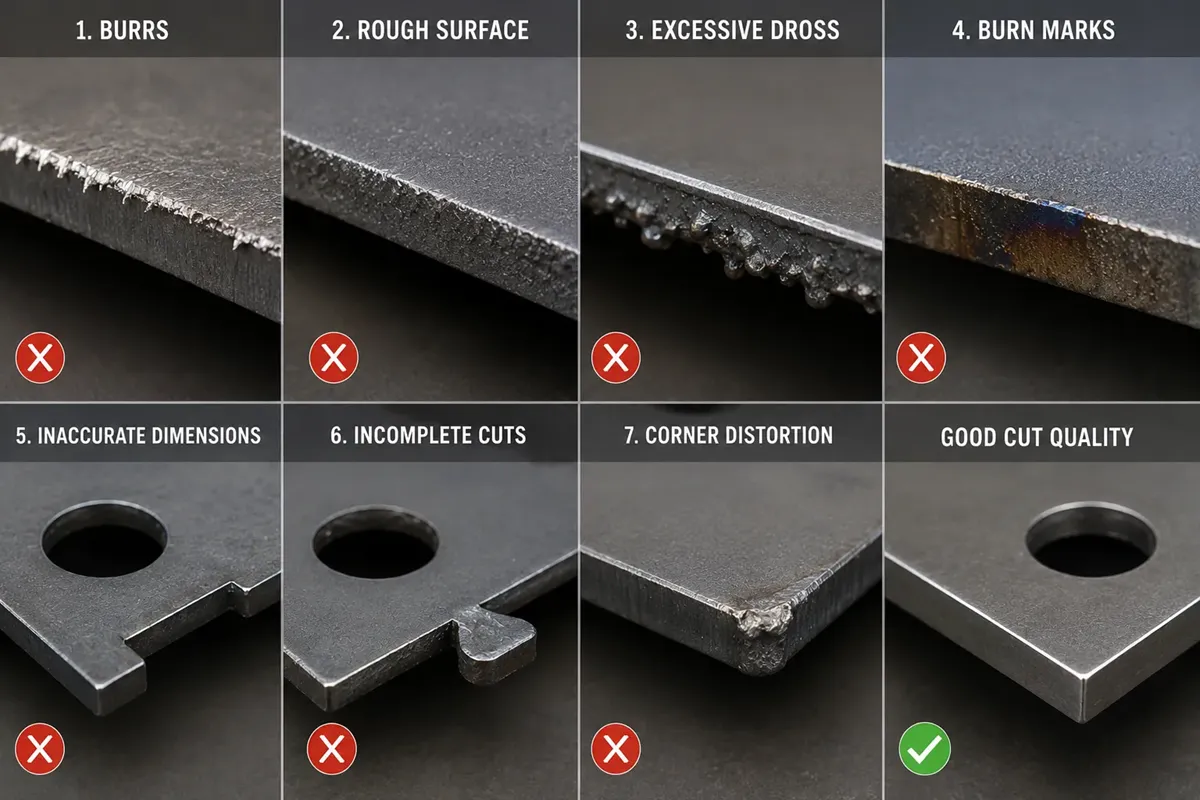
Even small defects can affect part quality, assembly, and production efficiency. Understanding the most common laser cutting issues can help manufacturers reduce waste, avoid rework, and maintain consistent results.
Let’s look at some common laser cutting defects and how they can be prevented.
1. Burrs on Cut Edges
One of the most common laser cutting defects is the formation of burrs along the edge of the material.
Burrs appear as rough metal projections that remain attached to the cut edge after processing.
Common Causes
- Incorrect cutting speed
- Improper gas pressure
- Worn nozzle
- Incorrect focal position
- Material contamination
How to Avoid It
- Optimize cutting parameters
- Maintain proper assist gas pressure
- Regularly inspect and replace nozzles
- Keep material surfaces clean
- Ensure correct laser focus settings
Clean edges reduce the need for additional grinding and finishing operations.
2. Rough or Uneven Cut Surface
A laser-cut edge should appear smooth and consistent. When the cut surface becomes rough, it can affect both appearance and functionality.
Common Causes
- Excessive cutting speed
- Insufficient laser power
- Poor beam quality
- Incorrect gas flow
How to Avoid It
- Match laser power to material thickness
- Use recommended cutting speeds
- Check machine calibration regularly
- Ensure proper assist gas supply
A smooth edge often indicates that the cutting process is properly optimized.
3. Excessive Dross Formation
Dross is melted metal that solidifies on the bottom edge of the cut.
This can make parts difficult to assemble and increase finishing time.
Common Causes
- Cutting speed too slow
- Incorrect gas pressure
- Improper focus position
- Material thickness beyond machine capability
How to Avoid It
- Adjust cutting speed correctly
- Use appropriate assist gas pressure
- Verify focus settings
- Select suitable machine parameters for the material
Reducing dross helps parts move directly into production without extra cleaning.
4. Burn Marks and Discoloration
Some materials may show burn marks, heat stains, or discoloration after cutting.
This is especially noticeable on stainless steel and decorative metal components.
Common Causes
- Excessive heat input
- Incorrect gas selection
- Poor material quality
How to Avoid It
- Use nitrogen for cleaner cuts where required
- Optimize laser power settings
- Maintain proper cutting speed
- Use high-quality material
For visible or cosmetic parts, surface appearance is often just as important as accuracy.
5. Inaccurate Dimensions
When parts do not match drawing specifications, assembly problems can quickly occur.
Common Causes
- Machine calibration issues
- Incorrect programming
- Thermal distortion
- Poor nesting setup
How to Avoid It
- Regularly calibrate equipment
- Verify CAD and CNC programs
- Use proper material support
- Perform quality inspections during production
Accurate dimensions are critical for components that must fit precisely during assembly.
6. Incomplete Cuts
Sometimes the laser fails to cut completely through the material.
This leaves sections connected to the sheet and requires manual removal.
Common Causes
- Insufficient laser power
- Excessive cutting speed
- Dirty lens or nozzle
- Material thickness too high
How to Avoid It
- Match machine capability to material thickness
- Maintain optical components
- Adjust cutting speed appropriately
- Monitor machine performance regularly
Complete cuts improve productivity and reduce operator intervention.
7. Corner Melting or Distortion
Sharp corners can sometimes become rounded or distorted during cutting.
This is often caused by excessive heat buildup in one area.
Common Causes
- Incorrect programming
- Excessive dwell time
- Improper machine settings
How to Avoid It
- Use optimized CNC programming
- Adjust corner processing settings
- Maintain proper cutting speed through corners
This is especially important for precision engineering components.
Why Preventing Defects Matters
Laser cutting defects don’t just affect appearance.
They can lead to:
- Increased material waste
- More finishing work
- Production delays
- Higher manufacturing costs
- Assembly problems
- Customer complaints
By maintaining equipment, using proper cutting parameters, and following quality control procedures, manufacturers can consistently produce high-quality components while minimizing waste.
Final Thoughts
Laser cutting is one of the most accurate and efficient manufacturing processes available today. Most cutting defects can be avoided through proper machine maintenance, optimized settings, and experienced operation.
When the process is correctly controlled, laser cutting delivers clean edges, accurate dimensions, and reliable quality that helps manufacturers improve productivity and reduce costs.
Need High-Quality Laser Cutting Services?
We provide precision laser cutting, CNC bending, and machining services for a wide range of industrial applications. Our focus on quality control and process optimization helps ensure accurate components with minimal defects and fast turnaround times.
Contact us today to discuss your project requirements and receive a customized quotation.